
Exploring Chinese wisdom in Sichuan, the connection with history and natural landscapes
Itinerary
Sanxingdui Museum-Huanglong Scenic and Historic Interest Area-Jiuzhai Valley National Park-Dujiangyan Irrigation System
Time
2026.8.25 - 2026.8.29
Charge
RMB 3,000
The expenses for field trip include accommodation, transportation, and necessary entrance fees.
Tips
-If the registrants are less than 10, the file trip may be cancelled.
-The attendees should be gathered in Mianyang travelling by plane from Nanjing after IMA2026. (It is recommended to take China Eastern Airlines Flight MU2853 on the morning of August 25th.)
-The flight tickets need to be paid for by the participants themselves.
Contact
Prof. Shiyong Sun, Southwest University of Science and Technology
Email, shiysun@163.com
The introduction of field trip
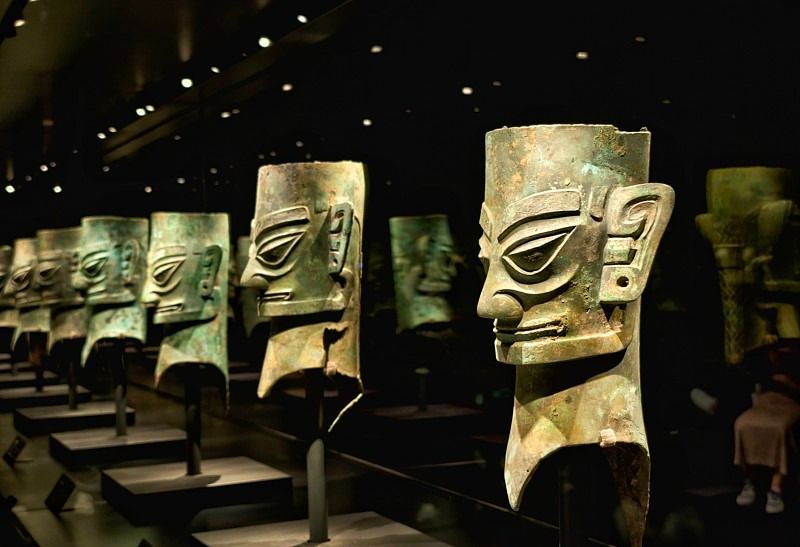
Sanxingdui Museum-An Archaeological Enigma with a Geological Foundation
The Sanxingdui archaeological site, located near Guanghan City in Sichuan Province, China, is one of the most astounding and mysterious discoveries of the 20th century. Primarily dating back to the Shang Dynasty (c. 1600-1046 BCE), it shattered the traditional narrative of Chinese civilization being centered solely on the Yellow River valley. While archaeologists are captivated by its bizarre and magnificent bronze masks, statuary, and gold artifacts, geologists and geoarchaeologists find equally compelling clues within the earth itself.
Sanxingdui is a multi-layered geoarchaeological archive. The site's secrets are locked not only in the bronze and gold but also in the soils, sediments, minerals, and chemical isotopes associated with it. By applying the tools of sedimentology, geochemistry, mineralogy, and geochronology, geologists collaborate with archaeologists to answer fundamental questions: Where did the resources come from? How and why were the objects buried? What was the ancient environment? And what geological or climatic events might have shaped the rise and fall of this brilliant, enigmatic culture? In this way, the earth beneath Sanxingdui tells a story as vital as the treasures it preserved.
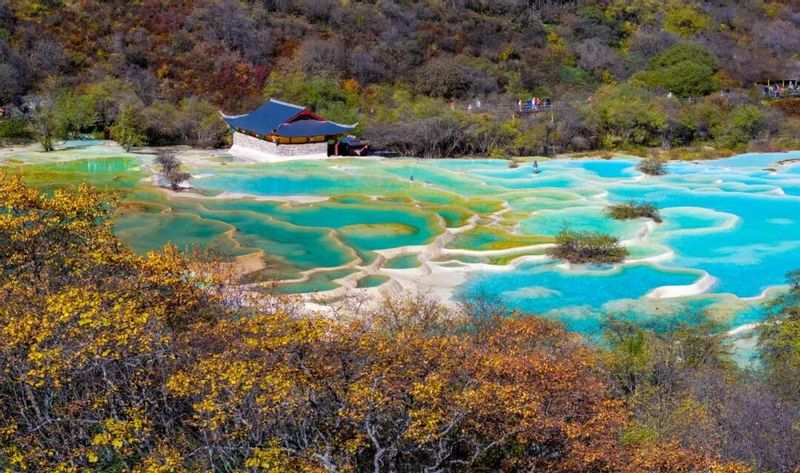
Huanglong Scenic and Historic Interest Area-A Geological Wonderland
Nestled in the mountains of northern Sichuan Province, China, the Huanglong (Yellow Dragon) Scenic Area is a UNESCO World Heritage Site renowned for its breathtaking landscape of vibrant, tiered travertine pools. While its beauty captivates all visitors, it holds particular fascination for geologists, offering a spectacular and active laboratory for the study of travertine (calcareous tufa) deposition. The core geological interest lies in its extensive travertine formations. This is not ancient, fossilized rock but a dynamic, modern system actively being shaped by water, chemistry, and biology.
Huanglong is far more than a scenic wonder. It is a vibrant, open-air exhibit of karst hydrogeochemistry, carbonate sedimentology, and geomicrobiology in action. It presents a rare opportunity to study the intricate interplay between geology, water, and life that creates one of Earth's most beautiful surface landscapes.
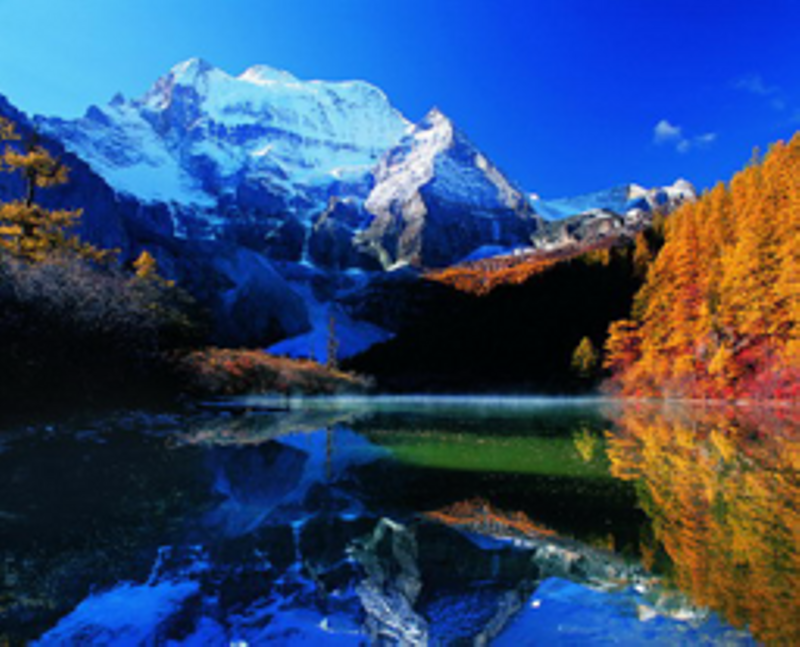
Jiuzhai Valley National Park- A Masterpiece of Karst Hydrology
Renowned worldwide for its ethereal beauty, the Jiuzhai Valley (Jiuzhaigou) in northern Sichuan, China, is a UNESCO World Heritage Site and a premier destination for scenic tourism. For geologists, however, it represents a stunning and textbook example of travertine (calcareous tufa) deposition shaping an entire landscape, creating its iconic colorful lakes, cascading waterfalls, and unique hydrological system. Jiuzhaigou is a magnificent, large-scale natural laboratory. It showcases how biotic and abiotic processes collaborate to precipitate calcium carbonate, constructing an entire landscape of dams, lakes, and waterfalls. It is a premier global site for studying the geomorphology, hydrochemistry, and geomicrobiology of cold-water travertine systems in a alpine karst setting.
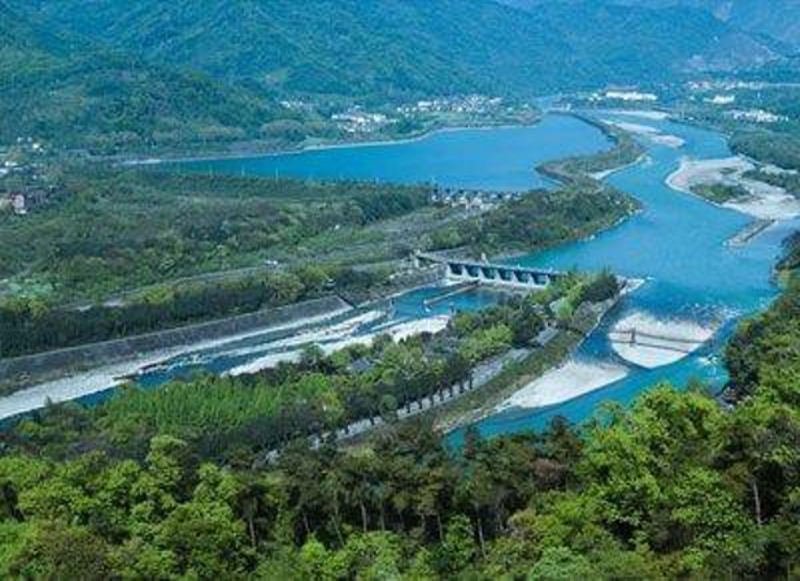
Dujiangyan Irrigation System- A Masterclass in Ancient Engineering Geology
Located in Sichuan Province, the Dujiangyan Irrigation System is a UNESCO World Heritage Site not for dramatic natural scenery, but for a 2,300-year-old human-engineered marvel that continues to function perfectly today. For geologists and engineers, it is a timeless case study in the ingenious application of geological principles to solve a complex environmental problem.
Dujiangyan is a profound lesson in applied geomorphology and environmental geology. It stands as a testament to how a deep reading of the landscape's geology can lead to an engineering solution that is both elegant and enduring, shaping civilization for over two millennia. The site continues to be a living laboratory for studying human-river interaction and sustainable water management.